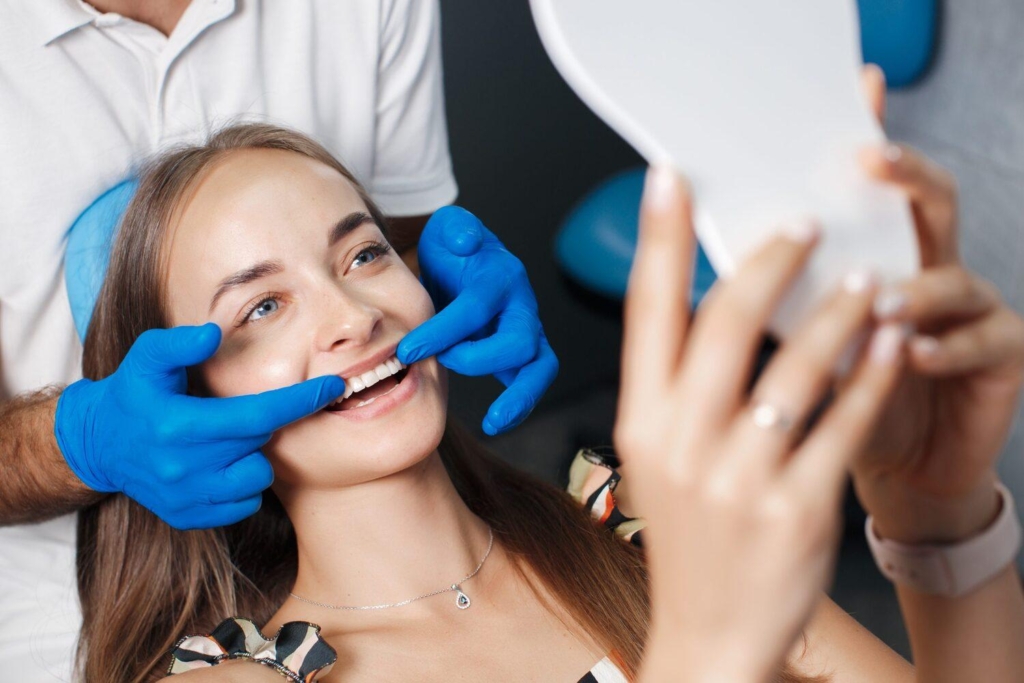
From all indications, delicate and gentle caring is the new dimension that cosmetic dentistry takes to go beyond just what can be seen and understood in lightening smiles. For someone upgrading, it is no longer just about what can be seen on the outside. In addition, empathy, comfort, and accuracy are expected through all processes. The very essence of the gentle care philosophy is successfully making a visible difference in the manner-how it brings the science of perfection in cosmetics with the gentle, patient-first sp. approach that takes fear away and builds confidence so that every smile makeover seems breezy.
Indeed, how cosmetic dental procedures can be said to be shaping, creating, and perfecting a smile that is nature’s gift to a person. The beautification of a smile, when done correctly, tests to the best extent preserved by an individual but, at the same time, influences the fine element of health in the spirit. The most majestic of these features are best achieved by subtle cosmetic touch. People fear cosmetic procedures because of a belief in pain and discomfort. The comfort offered by gentle dentistry completely obliterates these fears through an assurance of a really calm, predictable, and comfortable procedure.
It boasts itself to be yet another of the top favorites for treatment-and, indeed, a teeth whitening treatment here. The phenomenon created by a white smile has been phenomenal, while it indeed lifts a person’s esteem to high levels. It meets with gentle care in such a way as to apply safety in whitening teeth with enamel and sensitivity protection in a most effectively controlled manner. It is conviction, nevertheless, with it working towards the integrity-health of the teeth in a trained up-lift in shade that even the patient feels. This is not just a whitening solution but really a comfortable procedure with careful monitoring right from the beginning to end.
Another popular example of therapy the patient enjoys is cosmetics bonding. Deepened positivity is possible because chipping, cracking, and gaps in teeth can be fantastically hidden by very slight work. Instead of sanders and long procedures, bonding applies tooth-colored resin and sculpts it to perfection. The entire fast track of this procedure fits into gentle procedures, and its bonding, at essence, can be done in just one sitting. This treatment does not bring about anything that interferes with the natural appearance of the patient, and this is greatly appreciated during their stress-free miseries. Perhaps being one of the most subtle transformations effective for the enhancement of appearance, bonding makes sure that most of the natural structure of the tooth remains intact.
With gentle care, veneers are convinced to be indeed the most comprehensive option in cosmetics. They are like vessels that one would be able to shape according to their traits, power of character, and art cultivated within one’s mind. Maximum comfort can be given throughout the entire seamless procedure through gentle and strict conservationary dentistry. They can bring color development, a change in shape of teeth, amelioration of size, and correction of alignment and thus allow total smile reconstruction in the least abrasive manner. Professionally done, they feel and look very real and instill everlasting confidence.
Even procedures like gum contouring, which reshape the gumline for better symmetry, become more approachable with these gentle techniques. Using coated modern tools that minimize pain, swelling, and healing time, patients are able to obtain that beautiful balance in their smiles without the dread that usually comes with gum treatment. That added level of comfort helps people who otherwise might have shied away from these techniques have their smiles enhanced without the stress.
Clear aligners are another key awe-transformers under cosmetic surgery. Metal braces however however do not prevent the straightening of teeth gradually. Gentle care dentistry specifically enriches in this experience by providing individual monitoring, soft adjustments, and patient-centered support. The aligners shift teeth and do so without key persons having a glimpse because they are acting behind the scene in the daily life of the patient, implying that it is Euripides simple and comfortable to move on to that smile.
What makes gentle cosmetic dentistry most attractive is patient-dentist chemistry. It does give off that clinical twist into a more personified feel, wherein patients would feel that they are being heard, understanding, and respect. All treatment goes beyond aesthetics since they are designed for comfort, safety, and emotional well-being. Friendly, clear explanations and less painful techniques by means of current technology make bis-anxiety much reduced.
Another very important feature of all cosmetic dentistry is that it accounts for the biggest possible percentage of oral health. Thus, practitioners assure the continuous promise of their effort in beauty within bounds of health. Every unique treatment is approached with that in mind. Thus, general dentists do very detailed attempts to ensure that those cosmetically enhanced teeth are only an advertisement to general health promotion.
Gentle cosmetic dentistry strikes a balance of art and science, an aspect of technology and, on the other hand, empathy, instilling into people’s renewed consciousness and credibility to go amidst ripe health from myriad maladies. But an open floodgate to expressive behavior is revealed at the sight of a truly smiling face. What it brings has become really and well visible and a reason to live every day at full satisfaction.



Teeth Extractions in Highpoint
Tooth extractions are sometimes necessary when a tooth is severely damaged, infected, overcrowded, or cannot be preserved through other dental treatments. However, the recommended approach can vary depending on the patient’s age, tooth condition, extraction complexity, and overall oral health. Gentle Care Family Dental, located on Hickswood Road in High Point, provides dental care for children and families. Understanding the different extraction options can help parents and patients make informed decisions. This guide includes a comparison table and checklist to explain common extraction types, treatment considerations, and what to discuss with your dentist. Extraction Options in Highpoint: What Determines the Right Choice? The right extraction approach depends on the patient’s age, the condition and position of the tooth, and the complexity of the procedure. Type / Option Key Characteristics Best Fit For Simple Tooth Extraction Removes a visible tooth that can be accessed without surgical intervention. Patients with severely decayed, damaged, or loose teeth. Surgical Tooth Extraction Involves a more complex procedure when a tooth is broken, impacted, or difficult to access. Patients with teeth that cannot be removed through a simple extraction. Pediatric Tooth Extraction Focuses on safely removing baby or permanent teeth when clinically necessary. Children with severely damaged baby teeth, infection, or other dental concerns. Wisdom Tooth Extraction Removes wisdom teeth that are impacted, painful, or causing other dental problems. Patients experiencing complications related to wisdom teeth. Multiple Tooth Extractions Involves removing more than one tooth as part of a coordinated treatment plan. Patients who need several teeth removed due to dental conditions or treatment requirements. A simple way to understand the options: A straightforward extraction may be suitable when the tooth is fully visible and accessible. More complex cases may require surgical evaluation and additional care based on the tooth’s position and condition. The dentist will recommend the appropriate approach after examining the affected area Why Do Two Extraction Quotes in Highpoint Look Different? Dental providers may recommend different extraction plans because every case has different clinical requirements. Comparing the complete treatment scope is important because the procedure itself may not include every aspect of care. Common differences include: Treatment bundling: Some treatment plans include the consultation, extraction, and follow-up instructions, while others may list additional services separately. Complexity levels: A visible, loose tooth may require a straightforward extraction, while an impacted or broken tooth may need surgical treatment. Follow-up care: Patients may need different levels of monitoring depending on the extraction site, healing progress, and procedure complexity. Additional procedures: Diagnostic imaging, infection management, or other dental treatments may be necessary depending on the patient’s condition. For children, the dentist may also consider the development of permanent teeth and the impact of an extraction on future dental alignment. Extraction Types in Highpoint: What Each Option Involves Simple Tooth Extraction A simple extraction removes a tooth that is visible above the gumline and accessible to the dentist. It may be suitable for patients with severely decayed, damaged, or loose teeth that cannot be restored. This is generally a straightforward treatment when the tooth structure and surrounding tissues allow it. Surgical Tooth Extraction Surgical extraction is considered when a tooth is broken below the gumline, impacted, or difficult to access. The procedure requires additional clinical steps and careful evaluation. It may be appropriate for patients whose teeth cannot be removed through a simple extraction. Pediatric Tooth Extraction Pediatric tooth extraction involves removing a child’s baby or permanent tooth when there is a clinical reason to do so. Common reasons include severe decay, dental infection, trauma, or problems with normal tooth development. A children’s dentist in High Point can assess the child’s dental development and determine whether extraction is necessary. Parents searching for a pediatric dentist near me, kids dentist near me, or dentist for kids in Highpoint should look for a practice that understands children’s dental needs. Wisdom Tooth Extraction Wisdom tooth extraction may be recommended when these teeth cause pain, infection, crowding concerns, or damage to neighbouring teeth. The dentist evaluates their position and development before recommending treatment. Some cases may require referral to an oral surgeon for specialised care. The option should fit the case, not be picked like a menu item. The dentist should consider tooth condition, patient age, dental development, and overall oral health before recommending an extraction. Extraction Checklist: Included vs Extra Understanding what is included in an extraction treatment plan helps patients and parents prepare for the procedure. Often Included Often Extra or Case-Dependent Initial dental consultation Additional diagnostic imaging Examination of the affected tooth Specialist or oral surgeon referral Recommended extraction procedure Additional infection management Basic post-extraction care instructions Follow-up treatment or additional restorative care One important factor that can change the overall treatment plan is the position of the affected tooth. An impacted tooth or a tooth located close to surrounding structures may require additional evaluation and a more specialised approach. For children, the dentist should also consider how removing a baby tooth could affect the development and positioning of permanent teeth. The Extractions service page at Gentle Care Family Dental should explain when extraction is recommended and why the key decision factors—tooth condition, extraction complexity, and the patient’s age and dental development—matter when selecting the right treatment. Still Looking for the Best Extractions in Highpoint? Contact Gentle Care Family Dental Gentle Care Family Dental, located at 2380 Hickswood Rd, High Point, NC 27265, provides dental care for children and families. Patients and parents can contact the practice to discuss extraction concerns and understand the available treatment options. If you are searching for a children’s dentist High Point, family dentist near me, or a dental practice for your child’s extraction needs, a professional examination is a good starting point. Follow these steps before proceeding: Consult: Discuss the patient’s dental concerns, symptoms, and treatment history. Confirm the scope: Understand the tooth condition, extraction complexity, and recommended procedure. Choose the option: Review the appropriate extraction approach based on the dentist’s evaluation. Get the plan in writing: Confirm the procedure, aftercare instructions, follow-up