


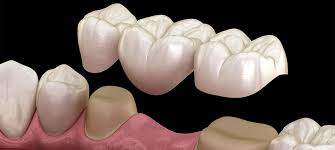
Dental bridges, one of the most reliable substitutes for one or more missing teeth, can make the experience more relaxed, more tranquil, and more comfortable when treatment is by means of a gentle-care approach. Gentle care means just keeping the focus on minimal discomfort, clear communication, patient-centered steps, and anxiety-reducing methods at treatment. Just this method is able to help those people who get nervous about visiting dentists, the sensitive ones, or anyone who prefers a smoother experience through treatment.
A dental bridge takes the place of one or more missing teeth; it uses surrounding teeth to support it and holds an artificial tooth in the empty space. The simple aims are the restoration of function, providing a natural appearance, and keeping the mouth free of decay. Gentle care would mean that the required work using the bridge is handled carefully and with consideration so as not to give the patient unnecessary anxiety.
What a Bridge Actually Does
The chewing, speaking, and bite-balance functions are maintained along with restoring lost teeth. Over a period, missing teeth create so many problems like shifting of adjacent teeth, change of bite, gum issues, and difficulty while having meals. Filling in the gap prevents all of these destitute ones-to-overhead. And that alone benefits an overall appearance of the smile, hence boosting one’s self-confidence. It’s a solid fact that since bridges are fixated and not removable, they feel much more stable than many temporary measures.
A gentle-care approach means that the whole process is done at a pace that is leisurely and where the dentist will involve the patient by fully understanding what the concerns, the pain sensitivity levels and comfort levels of that patient really are. This is in itself a comforting situation for those non-dentist-goers for quite some time or those worried about visiting the dentist.
Types of Bridges Used in Gentle Care Dentistry
The appropriate type of bridges recommended for gentle care dentistry is dependent on the condition of the patient. Some of the most common available options are:
Traditional Bridge:
It comprises crowns on both the teeth on either side of the gap. Strong, durable, and one recommended option for the most part when the remaining teeth can support it without undergoing severe rework.
Cantilever Bridge:
Operative when only one side of the gap, caused by a missing tooth, has a supporting tooth. This option is chosen with caution because it applies force onto the supporting tooth.
Maryland Bridge:
This option uses a metal or ceramic framework bonded behind a patient’s nearby teeth; thus, it conservatively lives up to its name because there is less filing done to the supporting teeth.
Implant-Supported Bridge:
In such a case, the bridge does not use the normal teeth but adopts the method of using implants to support the bridge. This proves to be a longer-term solution and works well when several missing teeth are present.
A gentle-care dentist tends to explain such alternatives in more detail and illustrates such options to the patient to help him select what is most appropriate for the specific oral condition and for any expectations one might have regarding comfort level.
How Bridges Are Done in a Gentle-Care Process
Reduce discomfort at every step in a gentle-care approach. The usual process entails:
1. Consultation and Evaluation
In this initial phase, the dentist will examine the patient’s mouth, view the gap areas, check the teeth available for support, and discuss the patient’s wishes. If required, x-rays or scans will be taken, and every detail should be made clear to the patient without any signs of confusion.
2. Tooth Preparation
Traditional bridges, however, shape the supporting teeth to hold the crowns, with local anesthesia numb for the area, and the dentist slowly works to avoid causing unnecessary discomfort. Co-validation of the patient’s comfort repeated and instruments and methods that lessen sensitivity are part of gentle-care techniques.
3. Impressions and Temporary Bridge
For recording mouth impressions for the final bridge, a temporary bridge is placed for cover on the prepared teeth and aesthetics. This state is meant to provide patients with a feeling of safety and comfort while waiting for their natural-look bridges.
4. Approximating the Final Bridge
Now the dentist checks the bridge hit, looks at the bite, and goes for alignment. Thus, the bridge fit will have to be adjusted until it’s just right for feeling as if it were meant to be there. Gentle care does not only ensure that the patient never finds themselves in a hurry but also makes them feel free to ask questions or request more tweaks.
5. Final Placement
The bridge is cemented securely. Again the bite is checked, and the dentist proceeds to provide easy-to-follow aftercare guidance.
Benefits of Bridges Under Gentle Care
Restores chewers to grain of comfort as before
Improves Smile
Maintains face shape
Prevent shifting of adjacent teeth
Secure and fixed replacement
Faster results than implants
Provides a calm, low-stress environment
Patients appreciate the gentle-care method because it respects individual comfort and emotional needs, making dental treatment seem easier and more approachable.
Care for a Bridge after it will Be Placed:
Proper care prolongs durability. Brushing twice daily, flossing, cleaning around the bridge, and scheduling regular dental checkups help maintain the restoration. Gentle cleaning techniques along with sound care keep the gums healthy and free from irritation. The best dental cleaning devices and techniques will be learned from the dentist.
Final Words:
Gentle Dentistry Treatment with Effective Bridges Holding Teeth Replacement Works with Care First. The Treatment has Great Facility to Deliver a Stable yet Natural-Looking Solution while Minimizing Patient Discomfort throughout the Procedure. This Form of Care Holds to Long-Term Oral Health and Confidence as Well as Peace of Mind, Making the Dental Restoration Smooth and Assured for Anyone Missing Teeth.